Back Conditions · Sciatica
Sciatica & Nerve Pain: North Beach Physio
Shooting pain, numbness, or pins and needles down the leg. We identify the source of the nerve irritation and treat the cause, not just the leg symptoms.
Sciatica is a symptom, not a diagnosis. It describes pain that travels along the Sciatic nerve, typically through the buttock, down the back or side of the thigh, and sometimes all the way to the foot. The pain can be sharp, burning, or accompanied by numbness or pins and needles. Effective treatment depends on identifying what's actually irritating the nerve, then treating that, not just the leg symptoms.
What Causes Sciatica?
Sciatica is irritation or compression of the Sciatic nerve or one of its contributing nerve roots. Common causes include:
- Lumbar disc bulge or herniation compressing a nerve root
- Spinal stenosis: narrowing of the spinal canal
- Facet joint irritation referring pain into the leg
- Piriformis syndrome: the piriformis muscle irritating the nerve as it passes through the buttock
- Degenerative changes in the lumbar spine
How We Treat Sciatica
Diagnosis first. The treatment for disc-related sciatica is different from piriformis-related referred pain. We work out what's actually driving your symptoms with a thorough clinical exam.
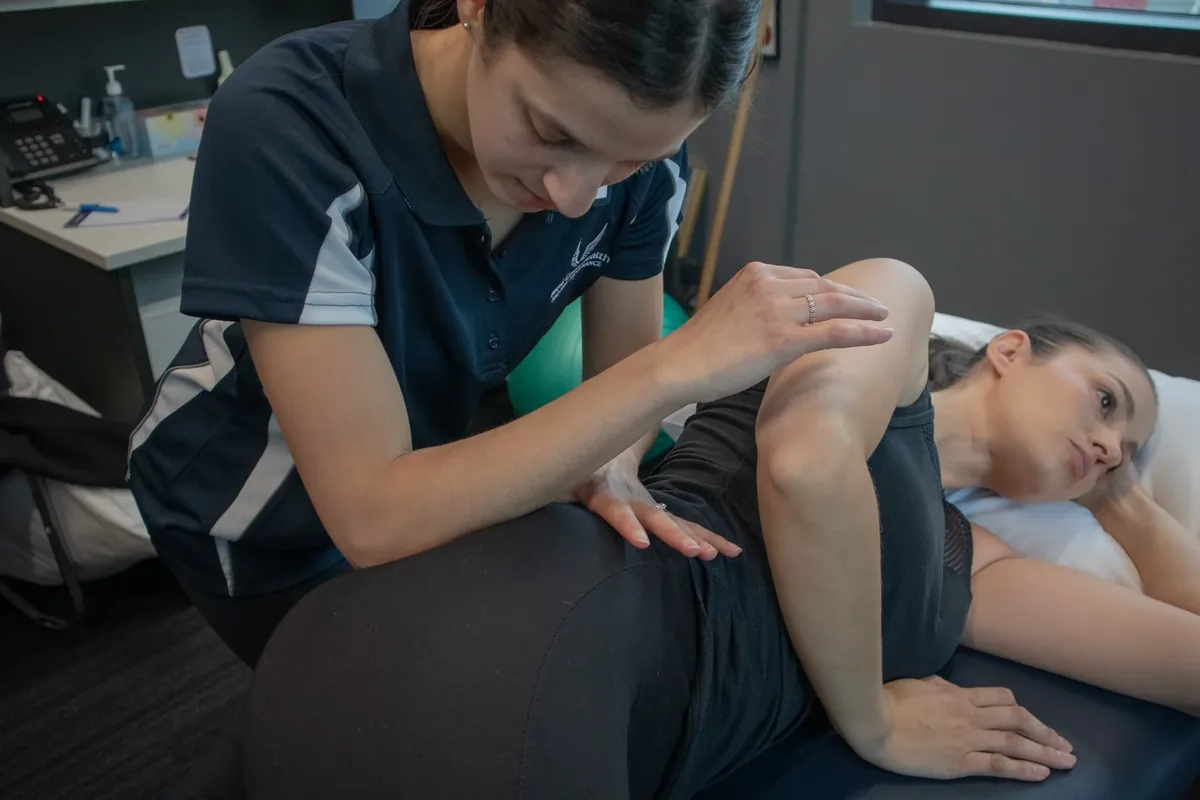
Pain and nerve management. Manual therapy, neural mobilisation, positioning advice and load modifications to reduce nerve irritation in the acute phase.
Progressive movement and strengthening. Targeted exercises to restore movement, build core stability, and strengthen the hip and glutes, addressing the underlying mechanical drivers.
Education on flare-up management. Sciatica can have a fluctuating recovery. We give you the tools to manage flare-ups confidently and recognise when something needs further attention.
Will Sciatica Go Away on Its Own?
Many sciatica episodes settle over weeks to months. But "settling" isn't the same as "fixed", and people who don't address the underlying cause often have repeat episodes. Structured physiotherapy aims to shorten the current episode and lower the chance of it returning.
When to See a Physio
- Pain, numbness or pins and needles travelling down the leg
- Buttock pain that's been present for more than 1–2 weeks
- Symptoms that started after a back injury, lifting incident, or prolonged sitting
- Recurrent episodes of leg pain
Seek urgent care if you develop numbness in the saddle area, loss of bladder/bowel control, or progressive muscle weakness. These can indicate cauda equina syndrome and require emergency assessment.
Related Conditions