Sports Injuries · Hamstring & Hip
Hamstring & Hip Injuries: North Beach Physio
The most common injuries in kicking and sprinting sport. Progressive loading programs that get you back on the field, and reduce the high re-injury risk that comes with rushed returns.
Hamstring strains are the single most common injury in AFL, soccer, athletics and rugby, accounting for around 1 in 5 of all injuries at elite level. They also have one of the highest re-injury rates in sport, often because rehab is cut short or under-loaded. The same patterns apply to hip flexor, adductor and groin injuries: rushing back without rebuilding capacity sets you up for the same injury again.
Hamstring & Hip Conditions We Treat
Hamstring Strains
Most hamstring strains happen at high speed, sprinting (usually biceps femoris) or over-stretching (usually semimembranosus). We grade the injury first (Grade 1 to 3), then manage early healing, then run a progressive loading program that rebuilds force tolerance through the full range, with high-speed running restored before you return to sport.
Hip Flexor & Quad Injuries
Common in kicking sports. Iliopsoas and rectus femoris strains have specific recovery patterns. We assess, treat, and structure return-to-kicking carefully to avoid recurrence.
Adductor & Groin Pain
Multi-directional sport (soccer, AFL, hockey) generates high adductor load. Pain can be muscular, tendinous, or referred from the pubic symphysis. Differential diagnosis matters. We identify exactly what's involved before treating.
Hip Labrum & Joint Pain
Hip joint pain (groin, anterior hip, deep buttock) can come from a torn hip labrum, FAI (femoroacetabular impingement), or referred from the lumbar spine. We screen all three.
Glute & Posterior Hip Pain
Often misdiagnosed as sciatica. Deep gluteal pain can come from piriformis or proximal hamstring tendinopathy. We work out which and treat accordingly.
How We Treat Hamstring & Hip Injuries
Accurate grading. Pulling up sore at training versus a full Grade 3 tear are completely different. Accurate early grading sets a realistic timeline.
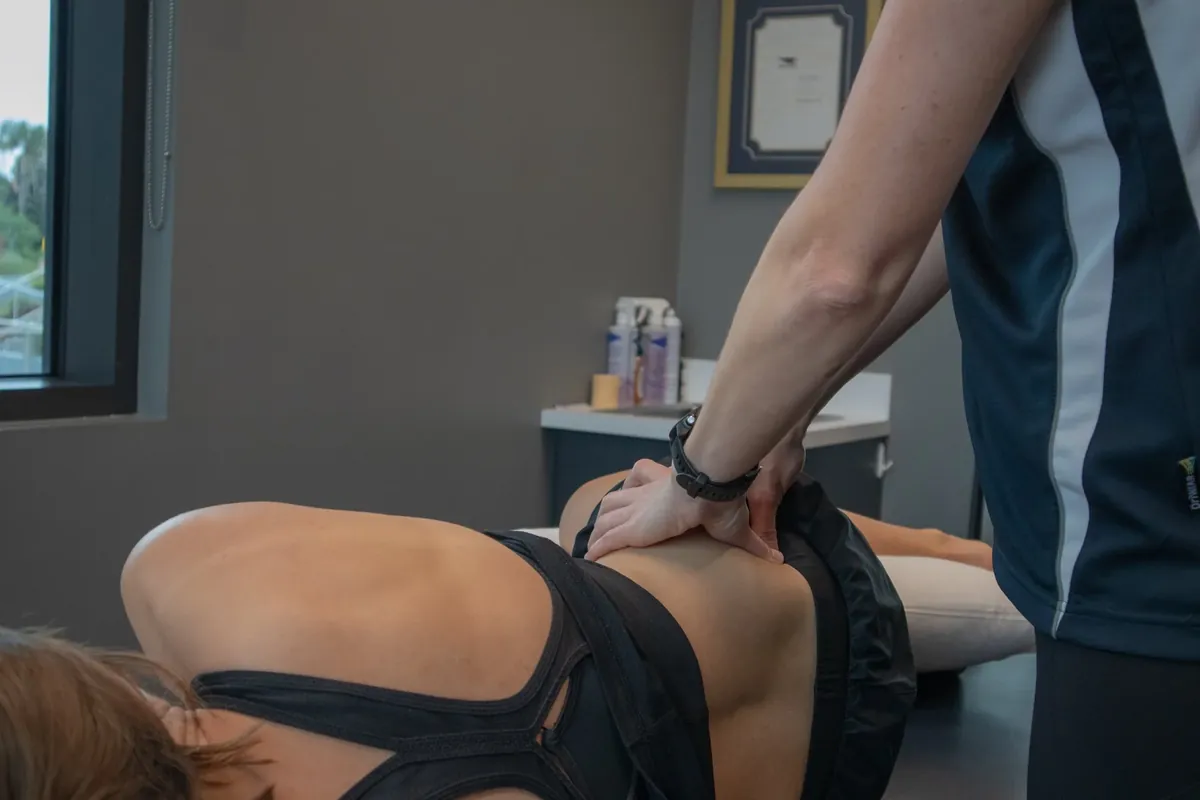
Hands-on early management. Soft tissue work, dry needling and graded movement to restore range while the tissue heals.
Progressive loading. Eccentric strengthening (Nordic curls for hamstrings), heavy compound work, then on-field running progression. Skipping any stage increases re-injury risk significantly.
Sport-specific reintegration. Sprint mechanics work, return-to-kicking protocols, change-of-direction at progressive intensity. Cleared only when objective markers are met.
When to See a Physio
- Sudden pain or "pop" in the back of the leg during sprinting
- Groin or hip pain that's been building over 1–2 weeks
- Recurrent hamstring tightness or strain in the same area
- Pain with kicking, lunging, or change of direction
Related Conditions